Cute Hippo Christmas Design Review
As a designer who spends more time staring at stitch simulations than actual fabric, I have learned that not every machine embroidery design translates well from screen to thread. Some look crisp in a digital preview but turn into a tangled mess of bobbin thread and frustration on the hoop. When I first pulled up the Cute Hippo Hippopotamus Christmas file, my initial reaction was cautious optimism. The concept is charming—a whimsical holiday twist on an unexpected animal—but the real test is always in the execution. Does it hold up under the needle? Is it viable for a serious craft business? Let’s break down how this design performs in real-world scenarios.
First Impressions and Visual Personality
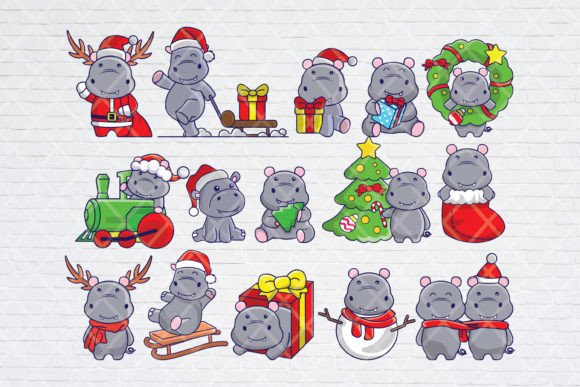
The immediate mood of this piece is playful and warm. It avoids the overly saccharine trap that many holiday designs fall into, opting instead for a character-driven approach. The layout feels balanced, with a clear focal point that draws the eye without overwhelming the surrounding negative space. For those of us working in Illustrations and digital art, we know that clean lines are essential for embroidery. This design appears to respect the limitations of the medium. The shapes are distinct, suggesting that the transition between color blocks will be sharp rather than muddy.
What stands out most is the visual personality. It feels friendly and approachable, which is exactly what you want for a personalized gift or a boutique item. It does not scream for attention; it invites it. This subtlety is crucial for modern small shop products where minimalism often outsells maximalism. The design sits comfortably in the "cute but cool" category, making it versatile enough for both children’s items and adult novelty wear.
Real-World Application: The Tote Bag Test
To truly evaluate an embroidery file, I mentally place it on various substrates. My go-to test case is a canvas tote bag. Canvas is forgiving, but it reveals issues with stitch density and pull. Imagining the Cute Hippo Hippopotamus Christmas stitched onto a natural cotton tote, I can see it working beautifully as a central chest print or a larger back panel design. The thematic elements suggest it would be a hit for holiday markets or as a quirky holiday embroidery accent for December giveaways.
Beyond totes, consider sweatshirt embroidery. A crewneck sweatshirt provides a stable, thick foundation that handles fill stitches well. If this design utilizes fill stitch areas for the hippo’s body, the plush texture of a fleece or heavy cotton blend will complement the thread sheen. It creates a tactile experience that customers love. However, if you are planning to use this on a thinner t-shirt, you must be vigilant about stabilizer choice. A cut-away stabilizer would be non-negotiable here to prevent puckering, especially if the design has any substantial width.
Versatility Across Product Lines
The adaptability of this design extends to several key categories for the modern Etsy seller:
- Baby Embroidery: The cute factor makes it ideal for onesies or baby blankets. Ensure the thread colors are baby-safe and the stitch count is not so high that it becomes stiff against sensitive skin.
- Embroidered Patch: If scaled correctly, this could make an adorable iron-on or sew-on patch. Patches allow you to pre-stitch the design on sturdy twill, eliminating fabric stability issues entirely.
- Kitchen Towels: A smaller version could work as a corner accent on flour sack towels, adding a festive touch to holiday hosting.
- Custom Apparel: Think beyond the standard tee. Denim jackets or corduroy shirts provide a textured background that contrasts nicely with smooth embroidery threads.
Technical Considerations and Stitching Clarity
While the aesthetic is strong, we must discuss the technical realities. Without seeing the specific stitch map, I advise checking the stitch density carefully. Holiday designs often pack in too much detail, leading to thread breaks or bird nests. Look at the transition points between the hippo’s features and the Christmas elements. Are there excessive jumps? Long travel stitches can be unsightly if not properly trimmed or hidden.
If the design incorporates satin stitch borders, ensure they are not too wide for the hoop size you intend to use. Wide satin stitches on curved surfaces, like caps, can warp easily. Speaking of caps, this design might be tricky on a structured dad hat unless it is significantly resized. Curved surfaces distort designs, and complex shapes can lose their integrity if the fabric stretches during stitching. Always run a test on a scrap piece of the exact fabric you plan to use. This is not just advice; it is a requirement for professional commercial embroidery.
Thread color contrast is another critical factor. If you are stitching on dark fabric, you may need to adjust the underlay or add a white base layer to make the colors pop. Conversely, on light fabrics, ensure that lighter thread colors do not get lost. Testing your thread colors against both black and white backgrounds is a smart move before committing to a production run.
Commercial Viability and Brand Consistency
For creative entrepreneurs, the question is always: will this sell? The Cute Hippo Hippopotamus Christmas design has high giftability. It fits neatly into the niche of unique, non-traditional holiday decor. It helps build brand consistency if your shop focuses on whimsical, animal-themed, or handcrafted goods. A well-executed embroidery project signals quality. Sloppy stitching, however, erodes customer trust instantly.
When listing this as a digital embroidery file or a finished product, transparency is key. Use high-quality printable mockup images that show the texture of the thread. Buyers need to see the dimensionality. If you are selling the physical item, highlight the care instructions. Embroidery adds weight and texture; educate your customer on how to wash their finished product to maintain its shape and vibrancy.
Designer Notes for Best Results
- Check Licensing: Before selling any items made with this design, confirm the license terms. Some creators allow unlimited commercial use, while others require an extended license for high-volume sales.
- Hoop Size Confirmation: Verify the maximum dimensions of the design. Ensure it fits within your machine’s largest hoop if you plan to scale it up.
- Stabilizer Selection: Match the stabilizer to the fabric. Use tear-away for stable woven fabrics and cut-away for knits or stretchy materials.
- Detail Inspection: Zoom in on the digital file. Look for tiny details that might not stitch out cleanly. Sometimes simplifying a design manually yields better results.
- Fabric Texture: Remember that fabric texture affects the final look. A fluffy towel will swallow small details, while smooth polyester will show every imperfection.
Final Verdict
The Cute Hippo Hippopotamus Christmas design offers a fresh take on holiday motifs. It is not just another snowflake or reindeer; it has character. For the handmade product creator, it offers a chance to stand out in a saturated market. However, its success depends entirely on your technical execution. Respect the fabric, choose the right stabilizer, and test thoroughly. If you approach this embroidery project with precision, it can become a standout item in your winter collection, delighting customers with its charm and craftsmanship. It is a solid addition to your library of design assets, provided you treat it with the professional care it deserves.